Orthodontist in Monroe
 You may have been referred to our office by your dentist because you were told your bite needed work. We see many patients referred to us who are sometimes surprised to hear their bite needs work, because they did not notice. Our doctor looks for a few key things when examining your bite.
The View You See
When you look in the mirror, you can see the front of your teeth. What we look for in our office is to see whether your teeth are too long. If you notice your top teeth are covering more than half of your bottom teeth, we call this a deep bite. We also check to see how your teeth are lining up in relation to your lip.
Looking Down
Imagine your mouth wide open. Our doctor will have you open wide to check your teeth’s alignment from the top looking down. An ideal bite will form an arch shape when viewed from above. This is also a good way for us to see if you have gaps between your teeth.
From the Side
It might be hard for you to see your mouth from the side, but it is another important view of your bite that we check in our office. From this view, we can see if your mouth structure needs to be adjusted from an overbite (where your top teeth stick out in front of the lower set) or an underbite (where your lower teeth stick out beyond the top).
Next Steps
Once we’ve evaluated your bite in our office, we can take the next steps in helping you achieve the results you desire. If you have gaps and spaces, we might consider treatment options such as braces or aligners. To correct under or overbites, we might consider treatments such as expanders.
Your Bite Matters
It is important to have a good bite because misaligned teeth can lead to difficulties while eating and speaking. Extensive jaw discomfort and tooth decay are also other side-effects of having an improper bite. Your oral health is dependent on having a good bite. Our experienced team is ready to assist you with any questions you might have.
For more information on the perfect bite or to schedule an examination, contact our office.
 When wearing braces, most people may experience occasional minor discomfort. Left unaddressed, some of these issues could lead to larger problems. Most of these issues can be avoided or remedied through practicing proper oral care at home. However, if any of these problems are persistent, it might be time to make an appointment with our team.
 If you have crooked teeth, you may already be looking into orthodontic solutions to improve your smile. However, did you know straightening your teeth can have benefits beyond increased confidence?
 The benefits of orthodontics are no longer just for children and teens. According to the American Association of Orthodontists, one in five orthodontic patients is over the age of 18. There are many reasons why more adults are receiving orthodontic treatment to improve their overall lives.
 Braces are a common rite of passage for many people, and, thankfully, they have become more comfortable over the years. People generally have few problems with their braces outside of the expected minor discomfort. However, depending on your lifestyle, there are potential risks to consider. Below are some common issues that you might experience and tips on how to avoid them.
 If the idea of biting into an ice cream sandwich makes you cringe, you may be one of the millions of people who suffer from sensitive teeth. This is often caused by movement of fluid in the dentin – the soft inner tissue beneath the enamel of your tooth. This motion irritates the tooth nerve, creating a tingling sensation and sometimes pain.
 An injury to your mouth can be a painful, expensive experience. For athletes, mouth and tooth injuries pose a very real risk. Mouthguards are an excellent tool for protecting your mouth from injury and harm. Our team can help you find a solution that protects your teeth.
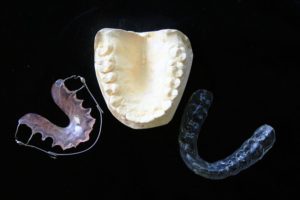 We understand how easy it can be to forget about your retainer. Once you get used to having one, it can become second nature to regularly care for it. For those who are new to retainers, however, it can be tricky to remember to take care of your new appliance. We’ve assembled a list of five tips to help you get started in the right direction.
 You may have been referred to our office by your dentist because you were told your bite needed work. We see many patients referred to us who are sometimes surprised to hear their bite needs work, because they did not notice. Our doctor looks for a few key things when examining your bite.